


New Valuable Community Development Loan Data For CRA Analysis Is Now Available
Community Development lending is a very important part of CRA performance examinations for all Intermediate-Small and Large banks.
But how do bank examiners judge Community Development performance?
The answer: Examiners use “performance context” data as a reference point to rate a bank’s performance under all CRA tests.
With respect to the CRA “lending tests,” examiners compare a bank’s activity to the lending activity of other lenders and to specific demographics within the bank’s “assessment area.” And, there’s plenty of loan market and demographic data available for all census tracts everywhere in the USA.
But there’s almost a complete lack of published community development lending data. In fact, the only community development lending database available is that published annually by the FFIEC. That database shows all community development lending reported by lenders.
However, the federal government’s data has several serious shortcomings. First, the data is not geocoded. All that is reported is the lender identity, the total number of community development loans originated and purchased and the total value of those loans. Since we don’t know where the lender extended the loans it’s impossible to assign those loans to any market smaller than the entire USA!
But there is at least one type of community development lending that can be identified down to the census tract level.
We are talking about qualified multifamily affordable housing lending.
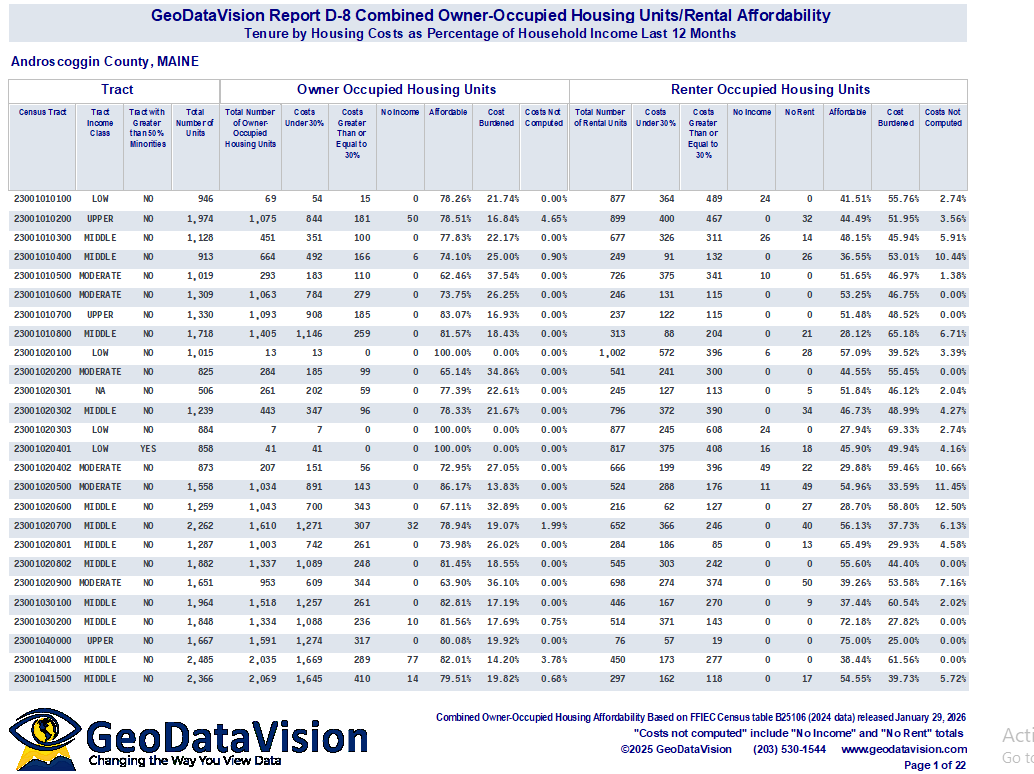
For the first time, GeoDataVision has captured and developed special market reports for all community development qualified affordable housing lending anywhere in the USA. This means you can now know all reported community development lending qualified in the form of affordable housing in your CRA assessment area. The suite of 4 market reports includes data on owner- and renter-occupied housing detailing the counts and percentages of affordable and “cost burdened” housing for every census tract.
You can now measure the affordable housing crisis and see how lenders are meeting the need down to every census tract!
GeoDataVision has compiled affordable housing mortgage market rank reports for every county in every state.
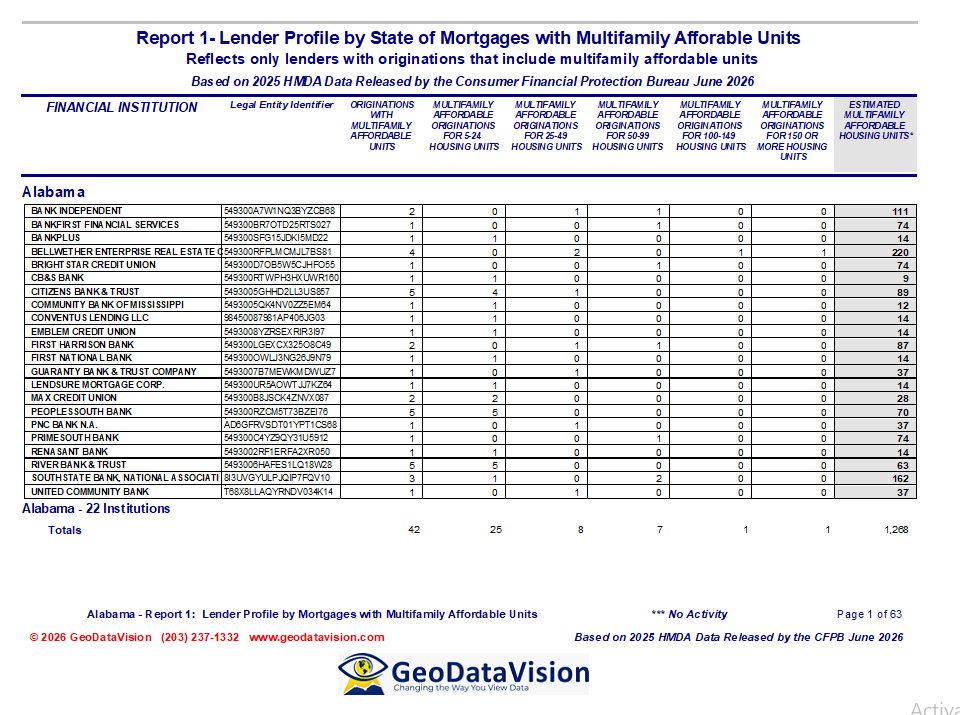
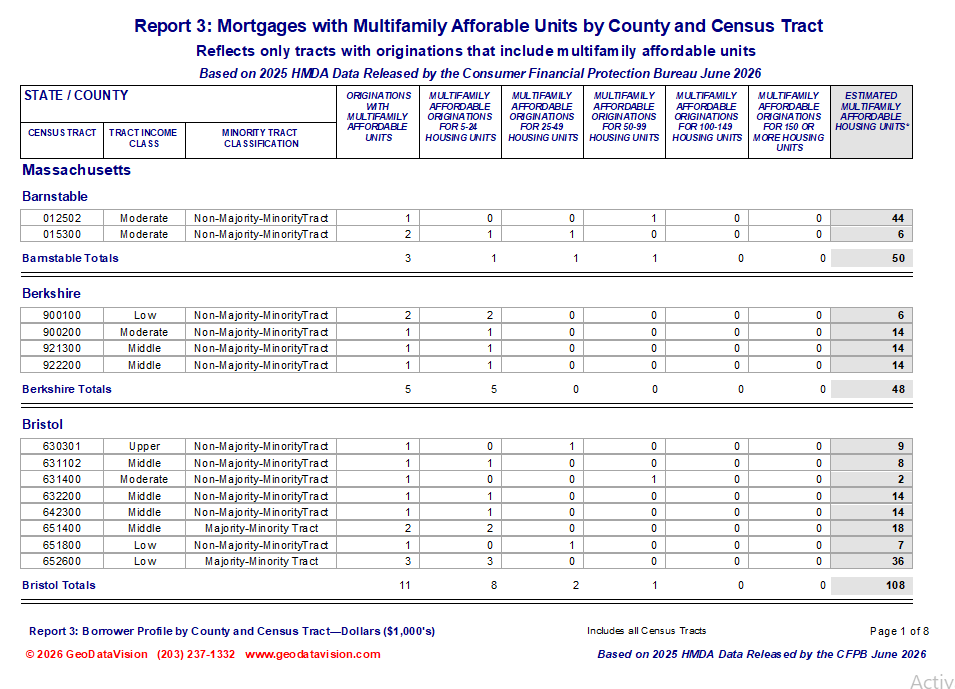
GeoDataVision has also developed reports that identify affordable housing lending in any census tract within your defined community.
Not only that, but GeoDataVision has also captured special market reports on the need for affordable housing in all census tracts anywhere.
Armed with this valuable performance context you can see how you and all other lenders are meeting the need for affordable housing in the communities your bank serves and you can identify how acute the affordable housing crisis is in every census tract.
Many of the foregoing reports actually provide you with detailed data that examiners don’t have!
Report 3 summarizes Multifamily Affordable Housing Lending by tract income class and minority status. Even examiners don’t have that data!
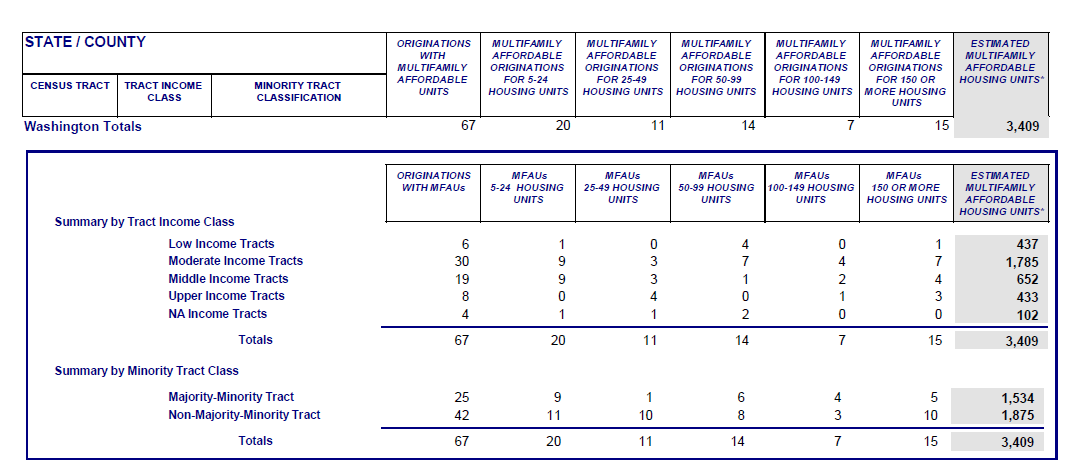
The Affordable Housing Community Development Market suite of 4 special reports is available as follows:
Custom suites of the 4 reports can be created for your uniquely defined CRA assessment areas.
The cost of the 4 standard reports is $750 per state.
Customized reports for your uniquely defined assessment area or REMA are available. Contact us for a quote.
These reports are not currently available from any other source.
Are you looking for deeper insights into affordable housing financing?
Our Affordable Housing Market Reports have you covered. Whether you want to learn more about the data or are ready to dive in, our team is ready to help.
Order online: https://geodatavision.com/downloads/affordable-housing-financing-reports/
Email Len: [email protected]
Call or email Josh: 203-907-7497 | [email protected]

Unpacking FDIC Consumer Compliance 2026 Supervisory Highlights
In this episode of Compliance 911, Len Suzio and Dean Stockford unpack the FDIC’s 2026 Consumer Compliance Supervisory Highlights. While 98% of FDIC-supervised institutions earned satisfactory or better ratings, weaknesses in compliance management systems continue to create risk. The discussion focuses on the most common violation areas — Truth in Lending, Electronic Fund Transfers, Flood, Truth in Savings, HMDA, and third-party oversight — emphasizing that disclosure accuracy, timely error resolution, operational discipline, and vendor management remain critical priorities for banks.
Brought to you by GeoDataVision and M&M Consulting


GeoDataVision · Changing the Way You View Data
